


Michel Foucault, by some counts the world’s most cited author, was born a hundred years ago today. Though he died forty-two years ago, the controversial philosopher’s image remains remarkably cutting-edge. Foucault’s signature concepts—power/knowledge, panopticism, biopower—still sound deliciously subversive. Though he died too soon to be drawn into our never-ending culture wars, he continues to be associated—negatively or positively—with queer theory, the critique of the gender binary, prison abolition, and postcolonialism.
Yet if one visits Foucault’s granite tombstone in a gray, drab cemetery along a country road in the Poitou region of France, it is hard not to see him from a different perspective. He seems old. As he turns one hundred, could it be that Foucault stands out less for his ongoing relevance than as a throwback to a world we have lost?
Ever since he burst onto the intellectual scene in France in the 1960s, then crossed the Atlantic to become a leading figure of “French Theory” or “postmodernism” in the United States in the 1970s and ’80s, Foucault challenged conventional wisdom and proposed giddily new ways of thinking. His work on the historical conditions of knowledge, the dissemination of “micropowers,” and the social function of “normality” seemed to overtake and then lap the twentieth century’s most radical forms of thought. Foucault appeared to out-Marx Marx, psychoanalyze Freud, and achieve a deeper level of authenticity than existentialism. He was fond of slogans that showcased his readiness to dispense with the past. He predicted the “death of the author,” described “man” as a recent “invention” that was “nearing its end,” and dismissed the state as a concept that was useless to political analysis. He described a book by Jean-Paul Sartre—the defining French intellectual of the postwar era—as a failed “attempt by a nineteenth-century man to understand the twentieth century.”
The sense of Foucault’s prescience continues to shape how he is seen today. In July, a New York Times essay declared: “From AI to the Deep State, Michel Foucault Foresaw It All.” Many conservatives find fault precisely with Foucault’s radical modernity, as do some left-of-center critics of wokeness, such as Susan Nieman and Yascha Mounk.
“Consider the world in which he lived.”
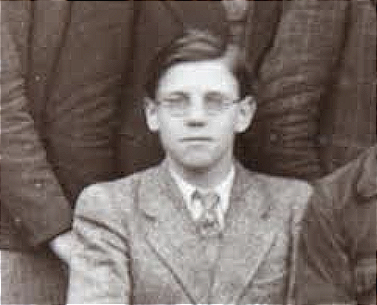
Foucault’s birth centenary may be the moment to ask whether his avant-garde reputation is exaggerated. Consider the world in which he lived. Foucault was born to a bourgeois family in the regional capital of Poitiers, where his father and grandfather were both prominent doctors. He remained in this milieu until, at the age of eighteen, he moved to Paris to study in 1945. Foucault’s concerns were decisively shaped by the provincial world in which he was raised.