


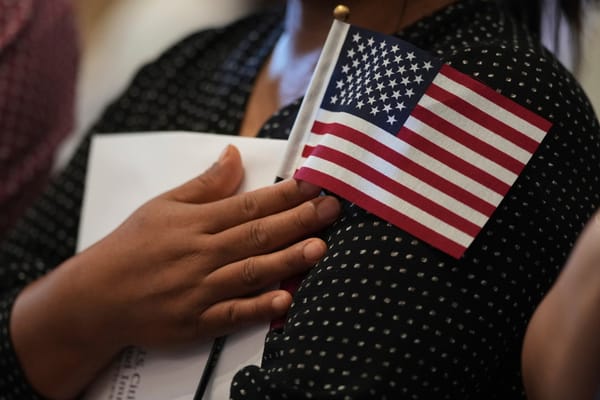
Is there an American political creed? If so, it is a striking fact that few Americans seem able to agree on its content. Even granting the acceptance of such a creed, a harder question presents itself: What is the right method for translating it into political practice? And yet, for most of a century now, a great many historians, legal scholars, philosophers, journalists, and politicians have supposed some such tacit principle lies at the heart of American social mores and public life. The creed, if we acknowledge that it exists anyway by implication, requires us to read the motive and meaning of the US Constitution through five words in the Declaration of Independence: “All men are created equal.”
The creedal idea of America “purely as an idea” was challenged in a speech delivered on July 5 by Vice President JD Vance. “If you think about it,” said Vance, “identifying America just with agreeing with the principles, let’s say, of the Declaration of Independence, that’s a definition that is way over-inclusive and under-inclusive at the same time.” Vance elaborated:
Social bonds form among people who have something in common. They share the same neighborhood. They share the same church. They send their kids to the same school. And what we’re doing is recognizing that if you stop importing millions of foreigners into the country, you allow that social cohesion to form naturally. It’s hard to become neighbors with your fellow citizens when your own government keeps on importing new neighbors every single year at a record number.