


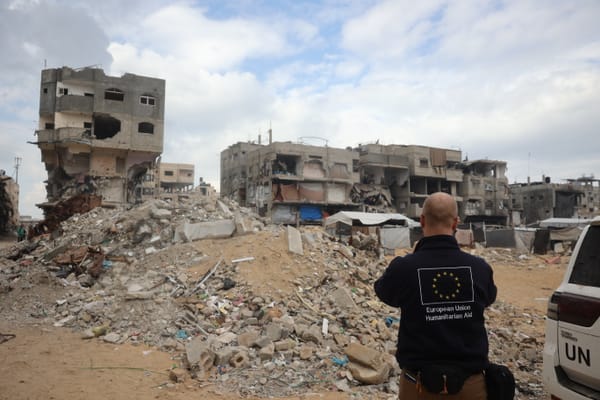
Conflicts like the war in Gaza are typically understood in terms of historical grievances, oppression, or power imbalances. But another factor is also at work: a humanitarian paradox. In a tragic irony of modern warfare, the very norms designed to protect civilians from harm are increasingly weaponized to endanger them. Political scientist Alan Kuperman first described this dangerous dynamic nearly two decades ago as the “moral hazard of humanitarian intervention.”
Kuperman’s thesis was that international protections intended to safeguard vulnerable populations can instead incentivize insurgents to provoke state retaliation, anticipating that global outrage may trigger foreign intervention. Today, that dynamic is on display in asymmetric warfare between state and non-state actors. From Lebanon and Afghanistan to Gaza, the logic of modern war has evolved in part as a response to a dangerous feedback loop: Militant groups exploit humanitarian norms by embedding themselves within civilian populations, provoking retaliation, and relying on international condemnation of their more powerful adversaries to constrain that response.
Those who make note of this pattern usually condemn it as cynical politicking on the part of non-state insurgents like Hamas. But in reality, it is a structurally embedded moral hazard in which one actor’s compliance with international norms becomes the other’s strategic asset. But the pattern no longer ends there. As Kuperman himself more recently argued, states too may leverage international legal frameworks to shield disproportionate violence, using self-defense as a legal and moral umbrella for conduct that might otherwise be condemned.
“It is a call to rethink how humanitarian norms function in real-world conflict.”
Moral hazard in warfare has evolved into a reciprocal and systemic phenomenon—one that flourishes wherever legal asymmetries, information warfare, and inconsistent accountability allow belligerent parties to manipulate civilian protection for strategic gain. Recognizing this dynamic is not a defense of brutality; it is a call to rethink how humanitarian norms function in real-world conflict, and how their instrumentalization can endanger the lives they were meant to protect.