


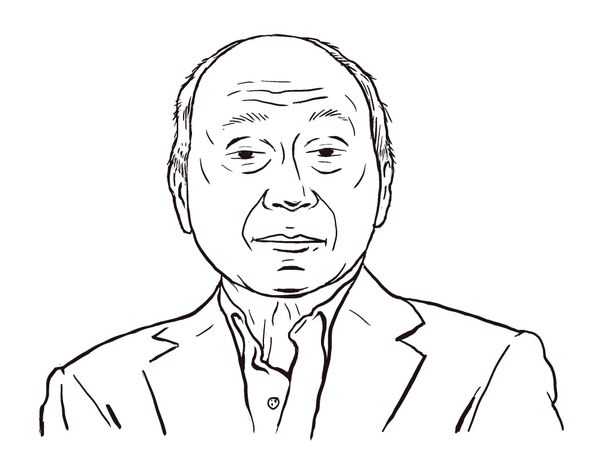
In the Realm of the Last Man: A Memoir
By Francis Fukuyama
FSG, 304 pages, $29
The publishing industry is experiencing a surge in memoirs, and the Boomers are to blame. They want to reflect on their lives and describe the vanished world of their youth before they themselves vanish from the earth. It’s a surge in supply, not a surge in demand. Readers are skeptical the Boomers have something to say. But if the memoir of any member of that generation deserves a hearing, it is Francis Fukuyama’s.
Born in 1952 to a family of first- and second-generation Japanese immigrants, Fukuyama vaulted to fame with his 1989 essay “The End of History?,” becoming one of the world’s most celebrated public intellectuals. His memoir, In the Realm of the Last Man, is marketed as a personal and intellectual autobiography that also provides an apologia for his most famous thesis. The book checks off several boxes of the memoir genre. Fukuyama describes his family origins, childhood, education, and his first professional postings with the RAND Corporation, the CIA, and the State Department prior to publishing his famous essay. He reflects on his personal hobbies (he is an amateur computer coder and carpenter). He reminisces about his intellectual influences: Leo Strauss and his student Allan Bloom, the social scientist Seymour Martin Lipset, and the political scientist Samuel Huntington. Modest and laconic about his political connections, Fukuyama regales readers with amusing anecdotes of an audience with Muammar Gaddafi and a more personal friendship with a senior official in the Chinese government. He also explains why, like most of his generation, he has become less conservative over time.
“The book isn’t really a memoir.”
Yet the book isn’t really a memoir. A few pages in, as Fukuyama recounts his family’s history in America, he abruptly veers off from talking about relatives interned during the Second World War to declare that “in 2025, the US returned to mistreating people—this time, those suspected of being undocumented migrants.” Most of the book is like that. Every few pages, Fukuyama connects an old story, teacher, or lesson learned to some deplorable recent action by Donald Trump or his allies. The book begins with Trump’s second inauguration, casting him as a world-historical figure dismantling the postwar liberal order. It ends by invoking the challenge Christian nationalists and the “strong gods” pose to liberalism. At the heart of In the Realm of the Last Man is Fukuyama’s struggle to explain the success of emerging political movements, particularly Trump’s, which repudiate the consensus he helped define in his youth. What he doesn’t acknowledge is that many of his intellectual shifts mirror those of the movements he despises.