


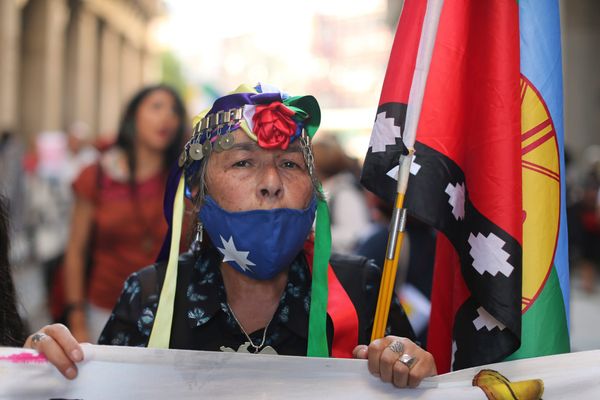
The Postcolonial Volk
By Benjamin Zachariah
Polity, 176 pages, $25
You might have noticed that at some point, progressive types began to use the term “folks” to refer to “people.” There are black folks, queer folks, indigenous folks. The change is significant. Whereas “people” evokes a sense of a universal subject, “folks” is particular. It implies a world of distinctions: different cultures, different experiences, different interests. No people, just “peoples,” all speaking with a different voice. From this perspective, “The political world is a pluriverse, not a universe.”
While the idea of a pluriverse has become increasingly popular within decolonial thought, that last line didn’t come from the tradition’s ever-proliferating ranks of academic adherents. It came from Carl Schmitt, the Nazi jurist. At a time when everything is “literally Hitler,” the comparison can seem overwrought. But it is precisely the comparison between post-colonial particularism and the völkisch right that Benjamin Zachariah reveals with a keen sense of the absurd in his new book, The Postcolonial Volk.
“It’s not really from the Global South at all.”
Zachariah critiques the “conglomerate” of postcolonial and decolonial theory clustering around what’s come to be known as “theory from the Global South.” But appearances are deceiving, because it’s not really from the Global South at all. As Zachariah describes, its language and legitimacy claims are crafted in the Global North, exported to the Global South, and then reimported as authentic non-Western knowledge.