


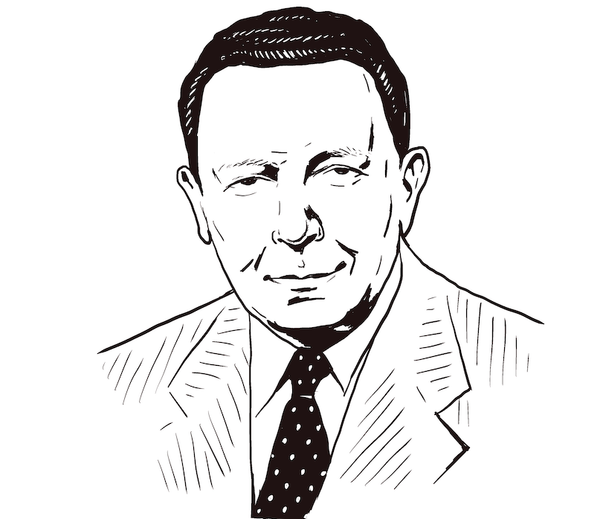
Like the 2020s, the “Roaring Twenties” of a century ago witnessed a technological revolution: The rise of the automobile, widespread electrification, and mass production had all transformed everyday life. In his speech accepting the Republican presidential nomination in 1928, Herbert Hoover declared that America was closer than any society in history to the “final triumph over poverty.” But trouble was brewing.
Beginning in 1926, a little-known Polish political economist named Henryk Grossman gave a series of lectures at the University of Frankfurt in which he argued that the era’s great productive forces had been built on a fatally unstable foundation. While America’s material prosperity was real, much of its enviable monetary fortune was in fact fictitious. Profits were not growing fast enough to keep pace with the ever-greater amount of capital seeking a return. Following the figures closely, he noticed that in 1927, “industry and commerce have watched their production fall, their sales decline, and their profits contract,” even as bank deposits swelled. Capital was instead flowing into speculation in stocks and real estate. The United States felt as if it were whizzing toward the peak of the mountain, when it was actually about to slam into it at full speed.
In his well-timed The Law of Accumulation and Breakdown of the Capitalist System, which appeared just months before the Wall Street crash of 1929, Grossman argued that the reason for the problem he had identified was simple. Each wave of mechanization allows firms to produce more with fewer workers, cheapening goods and allowing the most efficient to win out against competitors. But this also ties up more and more capital in machinery. Output soars while average returns sink lower and lower. Eventually, there is more capital seeking profitable outlets than production can absorb, and the excess spills into speculation. This is why the money wealth of the 1920s was perilously fictitious. It consisted of claims on future profits that the real economy would never generate.