


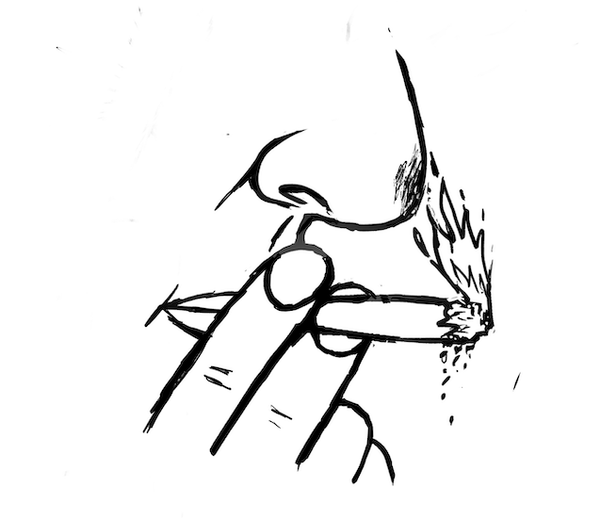
In December, President Donald Trump set in motion a revolution in federal drug policy: the reclassification of marijuana from federal Schedule I to Schedule III under the Controlled Substances Act. When Trump signed his executive order on this issue, he appeared surrounded by men and women in white medical coats as well as major players who stand to benefit from the reclassification. One of these was Howard Kessler, the man who invented the affinity credit card, and who now has ties to a company selling CBD products aimed at seniors. Other important players remained off-stage. Kim Rivers—the CEO of Trulieve, one of America’s largest marijuana operators—played a major role at a private meeting in convincing Trump to adopt this policy.
Trump touted the move as a way to promote research into marijuana. But marijuana is already one of the most studied drugs in the world. Rescheduling will do little to enable new research. Nor will it unlock potential therapies.
What it will do, though, is make people like Rivers even richer.
As a Schedule I drug, marijuana faces a significant commercial restriction via section 280E of the tax code. That prevents businesses trafficking in Schedule I substances from taking ordinary deductions for expenses, such as marketing. A move into Schedule III would end this restriction, providing significant tax relief and freeing up funds to spend on driving up sales; one analysis sets the total cost of these tax breaks since the inception of America’s legal industry at more than $2 billion.
In other words, the most immediate effect of this policy shift would be to enrich the cultivators and sellers of a federally illegal drug. But this basic reality is obscured by an economic myth that has flowered around the drug: that legal marijuana markets produce significant economic benefits for the citizens and states that participate in them—benefits that outweigh the visible, quantifiable costs of increasing access to the drug.
The myth of legal marijuana’s benefits was seen in full on the last day of 2024, when New York Gov. Kathy Hochul put out a press release celebrating her state’s legal marijuana industry. The “historic milestone” lauded by the governor was that the drug had just surpassed $1 billion in state-legal sales: a “testament,” Hochul enthused, “to the hard work of those who helped build the strongest cannabis industry in the nation: one that prioritizes equity, ensures public safety, and empowers communities.” This “achievement,” she went on, came “at a time of remarkable growth for cannabis consumption in New York. Over the past decade, adult use has risen significantly, with 19 percent of New Yorkers reporting annual use (+30 percent) and 12 percent reporting monthly use (+43 percent).”
It is hard to imagine this sort of public celebration about the growth of New York’s alcohol sales or its tobacco sales, about an uptick in the percentages of New Yorkers who spend their time and money in casinos or consuming pornography, or about booming trends in ultra-processed food manufacture and the ever-increasing slice of Empire Staters who consume them.
Yet the celebratory tone of New York’s chief executive is customary among the twenty-four US states with legal recreational markets for marijuana. Quarterly and annual releases from state marijuana control entities and departments of finance in California, Massachusetts, and elsewhere trumpet in similar language the economic achievements of the marijuana sector, emphasizing economic growth, opportunity, innovation, as well as social-entrepreneurship values like equity and inclusion.
In states like California, elected officials and regulators are so concerned about public health that they require carcinogen warnings to be splashed across innocuous consumables like edible kelp and sliced bread. But when it comes to weed, the same officials openly hail the subordination of the public interest to corporate interests as a political and economic victory with no apparent cognitive dissonance.
“Marijuana remains the most misunderstood vice in America.”
Marijuana remains the most misunderstood vice in America. Our large and growing marijuana industry depends on obscuring the well-documented connection the drug has to a wide variety of severe physical and mental health issues, as well as its repeated failure to display anything like the significant therapeutic potential claimed for it. It relies, just as heavily, on eroding key social structures in order to make significant profits. This has had devastating consequences for an institution already under attack: the American family. Trump’s policy, should it come into full effect, will increase the intensity and damage of this attack.
I have seen the personal devastation this strategy wreaks firsthand. The organization I founded, Smart Approaches to Marijuana, works closely with the parents of children lost to this drug—and yes, it is more than possible to lose a child to marijuana. Ask the Bacchus family of Minnesota. Their son Randy—bright, warm, and talented—died by suicide in 2021. He was living in Colorado, the state that pioneered legal recreational marijuana. His death came after an adolescence plagued by addiction to marijuana and desperate attempts to get sober. He took his life in the grips of what the Bacchuses suspect—and the actual data on marijuana lend horrifying credence to this view—was an episode of marijuana-induced psychosis. His last texts to his family, the night before his death, run in part as follows:
I’m quitting weed for good and I want to surround myself with healthy and happy people. This has been too much for me and for you guys. . . I love you and am sorry for everything. I love dad and the same to him. I wish I would have been a better person.
So we have an enormous and growing industry that profits from addiction, whose products have had devastating effects on individuals and families. So how have the most vocal critics of our current economic order responded? A committed skeptic of neoliberal capitalism, Sen. Elizabeth Warren, proclaimed in 2020 that “legalization works,” touting it as a criminal justice measure and source of tax revenue.
“We have an enormous and growing industry that profits from addiction.”
But proponents of legalization overlook its costs. The best data we have around the worrying interaction of marijuana with developing brains shows that the drug—especially in its ultra-potent, contemporary forms—drives significant mental illness. Consider the publication, in February, of a major new study in JAMA Health Forum. Authored by researchers at UCSF and UCLA, the study made use of huge troves of data collected by healthcare titan Kaiser Permanente—the cohort it examined consisted of close to 500,000 adolescents. The central result? Even past-year marijuana use, i.e. not necessarily heavy or disordered use but a wide spectrum, was linked to a more than doubled risk of psychotic disorder and bipolar disorder by age twenty-six.
These findings are firmly in line with years’ worth of evidence. A January 2026 study from Mass General Brigham hospital researchers found that after commercialization in Massachusetts, rates of marijuana use and marijuana-related disorders disproportionately increased among adolescents who arrived in the ER with a psychiatric emergency. In 2023, a Danish study covering the health data of almost seven million individuals found that cannabis use disorder was associated with as much as 30 percent of schizophrenia cases among young men. Another 2023 study, from Columbia University, found that teens with non-disordered marijuana use (i.e. not addicts) had approximately two to 2.25 times greater odds of exhibiting mental health issues.
On the specific issues of suicide, a 2025 Sorbonne study found that marijuana use among adolescents was linked to a more than double risk of suicide attempts. And that represents a look at just the relatively recent literature: A 1987 study from The Lancet, using Swedish data, found that the relative risk for schizophrenia among high consumers of cannabis (use on more than fifty occasions) was sixfold what it was for non-users.
The mental health of US adolescents is already under extreme stress. The usual targets of blame are social media, a dysfunctional educational system, and a generation of parents at once too involved and too disconnected from their children’s lives. But the National Survey on Drug Use and Health, the gold standard of federal data around these issues, reported that among twelve to seventeen year olds in 2024, 18.8 percent had moderate or severe symptoms of a generalized anxiety disorder in the past two weeks, 15.4 percent had experienced a major depressive episode in the past twelve months, 11.3 percent had experienced a major depressive episode with severe impairment in the past twelve months, 10.1 percent said they had serious thoughts of suicide, and 4.6 percent said they made suicide plans. Some 2.7 percent said they attempted suicide in the past twelve months—that is 700,000 teenagers, to make the scale of this issue clear.
Crucially, data from the same year’s survey show that of those adolescents who had experienced a major depressive episode in the past twelve months, 25 percent had used marijuana in the past year. Among those who did not experience a major depressive episode in the past twelve months, only 7.8 percent had past-year marijuana use.
But marijuana’s harms are not restricted to older kids on the cusp of achieving their own agency.
Look at the troubling results of a study from 2016 by then-UCLA professor Bridget Freisthler: “parents who reported using marijuana in the past year engaged in physical abuse three times more frequently than those who did not.” That same study also noted that “density of medical marijuana dispensaries and delivery services was positively related to use of physical abuse.” A 2024 study from the National Institute on Drug Abuse, led by the eminent addiction scientist Nora Volkow, seemingly supports this finding. Its results suggest that there is a significant link between men who use marijuana daily and have a marijuana addiction and violent behavior and that for women, violent behavior is linked merely to use—not to heavy or disordered use.
Marijuana use in a family context isn’t only linked to violence. A study by Kaiser Permanente researchers from 2023 found that “maternal prenatal cannabis use was associated with more missed well-child visits at every time period,” with a 43 percent higher risk of missing a twelve-month visit, as well as with “missing two or more well-child visits through thirty-six months of age (35.8 percent among cannabis users vs. 23.0 percent among non-users).”
But today, young mothers and fathers may encounter article after article extolling the virtues of marijuana as a sleep aid, an anxiety treatment, an analgesic. Again, the science supporting these claims is beyond weak—a Cochrane review in January found no evidence that THC-based medicines had a meaningful effect on pain, for example—but they seem tailor-made to appeal to harried, anxious, sleepless parents.
Despite the explicit recommendations of leading medical associations like the American College of Obstetricians and Gynecologists, “cannamom” influencers still promote the drug as a tool for expectant and postpartum mothers to deal with nausea and anxiety. Children themselves see marijuana products clothed in bright, colorful trade dress, often with product names that echo and imitate the names of well-established snack brands, like “Stoney Patch Kids” and “Molly Ranchers.”
In Ohio, which legalized recreational weed in late 2023, hospital researchers have gathered data on what THC was doing to children. In 2018, the first year of data studied, saw 196 pediatric exposures to the drug; 2024 saw 1,028—an increase of 424 percent. More than half of all tracked exposures occurred in the youngest group studied, the 0-5 group. The raw numbers of exposures among kids that age jumped from forty-seven in 2018 to 582 in 2024, an increase of 1138 percent. The research team also provided an overview of the physical symptoms these exposures caused: central nervous system depression, respiratory depression, vomiting, hallucinations, and seizures.
But again and again, from left and right, state and federal politicians define any pushback against the efforts to expand access to this drug as economically and fiscally risky. “The $1.5 billion in sales of adult-use cannabis in Illinois translates into significant tax revenue,” said Illinois Gov. JB Pritzker of his state’s fiscal 2022 marijuana revenues. “Colorado’s world-class marijuana industry drives out criminals and cartels and is supporting Colorado businesses and jobs while driving revenue for school construction,” said Gov. Jared Polis of the 2025 numbers in the Centennial State.
Such arguments, it should be noted, are flatly contradicted by even cursory examination of publicly available data on the tax revenues state markets generate. For fiscal 2022 in Illinois, for example, the state’s overall revenue inflows were $177.6 billion, of which the “significant tax revenue” that $1.5 billion in marijuana sales generated accounted for 0.25 percent.
These arguments often include, almost as asides, concerns about the public health damage increased access to marijuana brings with it and handwaving promises that further legalization and normalization will end those issues. Nonetheless, the illusory economic benefits of the drug form the central justification for legalization and commercialization of marijuana.
If a progressive political satirist wrote all of this into a screenplay as an example of dystopian capitalism, it would seem too on the nose.
Even as its harms have spread and intensified, the marijuana industry has grown explosively. In 2016, two years after the first legal state markets for the drug opened in Colorado and Oregon, legal sales stood at close to $6.7 billion. According to industry statistics, that number has risen in the intervening nine years to around $31.5 billion. Industry projections have it hitting almost $50 billion by decade’s end. That is significant growth; all the more so when considering the very real pressure 280E puts on the industry—pressure amply justified by the public health risks the drug inflicts.
The coziness of the industry’s lobbying arm with the current administration has no doubt helped its cause here. Kim Rivers, the Truelieve CEO, attended a million-dollar-a-plate fundraising dinner for Trump at his Bedminster golf club, and the company donated $750,000 to his inaugural committee. But more powerful than either Rivers or Howard Kessler is the persistence, in the face of all evidence, of the myth that marijuana’s economic benefits justify its social harms.
“Industry lobbying groups have spent significantly and gone on to win state-level policy fights.”
It is clear why industry leaders would continue to insist that legal, commercialized marijuana is an engine of growth, opportunity, and even “equity” for any state bold enough to seize it. They are talking about their own books, after all. Why elected officials continue to repeat these claims is more mysterious. Industry lobbying groups have spent significantly and gone on to win state-level policy fights, but the consuming and uncritical enthusiasm for legal, commercial marijuana seems to far exceed what might be credibly driven by war-chest giving.
The truth is that legalized, normalized, commercialized marijuana has become a symbol of freedom for both the left and the right. On the left, asserting its value demonstrates boldness and vision, a commitment to helping the marginalized. On the right, defending marijuana is a confirmation of one’s love of free enterprise and industry.
Fortunately, recent months have seen some cracks in the consensus. The most prominent is likely the publication in The New York Times of a lengthy, deeply researched editorial significantly revising the paper’s previous approving position on marijuana legalization. The Times titled its recent piece “Marijuana Is Everywhere. That’s a Problem” and gave readers a full look at data around psychosis, addiction, and the general degradation of public health that followed in the wake of legalization and commercialization. It is also now a regular occurrence for marijuana-skeptical news stories based on studies or reportage to appear in CNN, The Wall Street Journal, and other approved organs of mainstream conventional wisdom.
That a backlash has begun seems hard to deny. It will also not come as a surprise to anyone familiar with the details of what legal marijuana has looked like in America. The year that Randy Bacchus died in Colorado, the state budget was $34.1 billion. Despite the celebration that year’s marijuana-tax inflows occasioned within the state, they amounted to less than 1.25 percent of Colorado’s total budget. The industry and much of America’s political and economic elite regards this as an acceptable tradeoff. It is increasingly clear Americans themselves do not.