


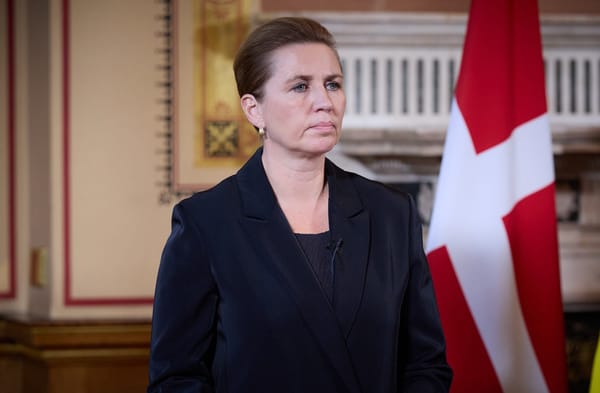
As left-wing parties across Europe have lost working-class voters to the populist right, Denmark has emerged as a striking exception. The Social Democrats, under the leadership of Prime Minister Mette Frederiksen, took a harder line on immigration than most other left-of-center parties, and thereby stemmed the tide of the ascendant hard-right Danish People’s Party. But just as left-wing parties elsewhere have begun to emulate their Danish counterparts, the Social Democrats have suffered a serious blow. In recent elections, they lost voters in a large majority of constituencies. They also lost the mayoralty in Copenhagen for the first time in 122 years, to Sisse Marie Welling of the Green Left Party.
But Welling is no Zohran Mamdani: Behind her was a coalition that ranged from the Red-Green Alliance on the left to the Danish People’s Party on the right. Only two parties were left out in the cold: the Free Greens—whose lone successful candidate, Sikandar Siddique, ran on campaign slogans including “Free Copenhagen from Zionism” and “dissolve the state of Israel”—and the Social Democrats. This was in part self-inflicted, as Social Democratic candidate Pernille Rosenkrantz-Theil had said she would refuse to back a deal that didn’t make her mayor. All or nothing proved a losing strategy.
“Frederiksen’s Social Democrats seem to be running out of steam.”
After six years in power, Frederiksen’s Social Democrats seem to be running out of steam. A new post-election opinion poll predicts the worst result for the Social Democrats since before Frederiksen took the post, and a narrow right-wing majority in parliament. It has been an eventful period with Covid and the war in Ukraine, and given a global anti-incumbency trend, her party has held onto power for an impressively long stretch. Frederiksen has fared best as a crisis prime minister: She was popular during the pandemic and has revived her furrowed brow for the European security situation.