


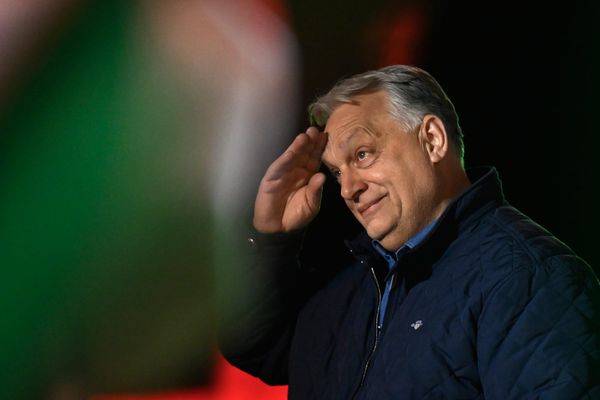
“All political lives, unless they are cut off midstream at a happy juncture,” wrote the Conservative Member of Parliament Enoch Powell in 1977, “end in failure.” Powell, the great English populist of his day, was referring to Joseph Chamberlain, the pre-World War I imperialist whom we would today call a populist. On Sunday, failure came for the most successful populist politician of our own time. Viktor Orbán, vying for a sixth term as Hungary’s prime minister, saw his party, Fidesz, blown out of the water by the newly assembled Tisza party of Peter Magyar, a former Orbán protégé who had been a member of Fidesz just two years earlier. Tisza appears to have taken 137 seats in the 199-seat parliament.
Magyar’s jubilant supporters and not a few journalists have painted the election as a victory of democracy over authoritarianism and xenophobia. That is a bit of a cartoon. Magyar presented himself as a conservative, campaigned primarily outside of Budapest, and—except on matters concerning the European Union—did little to differentiate his policies from those of Orbán. What brought Magyar to prominence two years ago was a strange scandal involving the pardon of a man accused in a sex abuse case—a pardon that the Justice Minister was blamed for having waved through. Magyar announced his departure from Fidesz. The minister, Judit Varga, resigned. Varga and Magyar were newly divorced at the time.