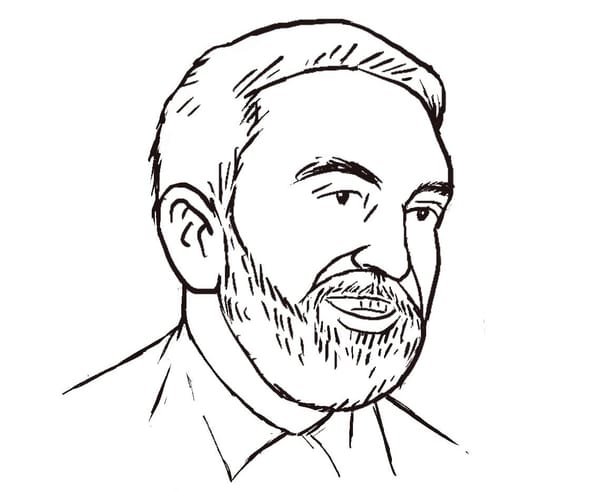
Zohran Mamdani’s meteoric ascent, from an obscure state assemblyman to the leader of the world’s most important city in less than a year, has naturally sent commentators scurrying to read the tea leaves. Some see him as a domestication of hitherto foreign ideological flavors, such as “third-worldism” or (to use a French term) “islamo-gauchisme.” Others see the relentless economic focus of his campaign as pointing the way to a new version of the Democratic Party that places affordability and the cost of living at the beating heart of its program. Still others resist the impulse to find any greater import in the rise of Mamdani, regarding him as merely a charismatic new face who got lucky to run against a uniquely unappealing establishment candidate in a one-party town.
There is more than a grain of truth to all these perspectives. And yet, none of them quite captures the meaning of Mamdani. Beyond the romance of his improbable climb to power, Mamdani is important because he will be arguably the first major American executive to win by combining the two great movements that have roiled the left since the Obama years: wokeness and the anti-capitalism spurred by Occupy Wall Street. And notwithstanding the recent bromance in the Oval Office, we can expect Mamdani to play a larger role in our national politics than is usual even for the most prominent mayors, because he incarnates the very things MAGA is most determined to oppose.
The centrality of economic concerns in Mamdani’s rhetoric has led several pundits to suggest that he demonstrates that progressivism is leaving wokeness behind. But Mamdani never ditched the substance of wokeness. Though he did soften the edges of the aggressive cultural progressivism that flourished over the past decade, the central motifs of wokeness—deference to boutique identities, suspicion of law enforcement, commitments to “equity” in education and other domains, denunciations of structural racism and environmental injustice, the (factually dubious) portrayal of minorities as constantly under threat in modern America—all persisted in his messaging and platform. Precisely as center-left thought-leaders are trying to inch their party away from trans rights activism, which has (rightly) been discredited in the public’s eyes, Mamdani has leaned into the issue, pledging to make New York an “LGBTQIA+ sanctuary city” and to use public money to fund gender-transition surgeries.
While Mamdani recently asked the respected police chief Jessica Tisch to stay on, negativity toward policing undergirds his substantive positions. He has vowed to stop the sweeps of homeless encampments instituted by Eric Adams, and has appointed “Community Safety” and “Community Organizing” transition teams staffed with woke true believers, including multiple police abolitionists and fervent BLM champions. The vestiges of the heady days of “Defund” linger in Mamdani’s plans to disband the NYPD strategic response group and shutter the city’s gang database, both of which are essential to preserving New York as the comparatively safe metropolis that it is. Continuing in the same vein of exalting social workers and therapeutic methods over retribution and punishment, Mamdani has endorsed “restorative justice” approaches to school discipline that effectively render authorities incapable of preserving learning environments from disruption and violence.
Most illustrative of all, by vowing to spend $100 million and hire hundreds of immigrant-rights lawyers, Mamdani found an absolute sweet spot of woke political activity. Mamdani has said it is a “cornerstone” of his politics to resist deportation of city “residents.” This is a fourfold act of progressive service: It strikes at Trump; it treats the distinctions between citizen and noncitizen and between legal and nonlegal members of the latter category as morally irrelevant, implicitly casting the very idea of governmental border control as illegitimate; it positions the left as the defender of all besieged minorities in America, even when they lack legal standing for their presence here; and it directs public funds to a highly valued constituency—that of left-leaning “public interest” law. What better way to fight Trump than by creating jobs in the left-wing legal and nonprofit sectors? That Mamdani is now making noises about compromising on this front and interfacing with ICE—as even New York City’s sanctuary law requires—is perhaps the first sign of a broader turn toward moderation that will be necessary if he is to find any success in office. But I wouldn’t bet on it.
“Occupy cast a long shadow over left-wing politics.”
Paired with this array of woke goals was Mamdani’s banner campaign message of economic fairness, which can be seen as the long culmination of the other great social movement of our century: Occupy Wall Street. Though little spoken of today, Occupy cast a long shadow over left-wing politics under which Mamdani still operates. Despite the movement’s hostility to electoral politics of the sort practiced by the Democratic Socialists of America, it reenergized that organization and helped make “socialism” something other than a dirty word for liberals. Occupy mainstreamed anti-capitalist rhetoric, and galvanized the intellectuals who provided a great deal of the conceptual scaffolding behind DSA’s ideology.
Politicians like Elizabeth Warren (now a close Mamdani ally) were quick to take credit for Occupy’s message of the fundamentally rigged and unjust character of American capitalism. Its main contribution to the lexicon—the 1 percent versus the 99 percent—gave its name to Mamdani’s economic plan and featured in his messaging. Bernie Sanders, the closest thing to the continuing personification of the Occupy spirit and the figure in modern American life who did most to make socialism cool, likewise framed his young pal’s win in terms of Occupy’s motto. Occupy’s emphasis on breaking up corporate power has carried on in the increasing salience of antitrust on the left, the standard-bearer of which, former FTC commissioner Lina Khan, has joined Mamdani’s transition team—an addition that the still-living Occupy X account celebrated.
Occupy’s legacy can also be seen in the elevation of protest; it made activism and demonstrations beyond the shop floor central to how the left approached economic issues in a way that had not been true for a long time. Mamdani is heir to this political style, which makes soaring demands for social justice in frequently unrealistic terms. The gap between bark and bite —the calls to end capitalism and overturn inequality by means that are both inadequate to the task and often beyond the power of the mayor—does not deter his supporters, who are drawn to his perceived moral clarity. Mamdani’s “one weird trick” socialism is more the heir to Occupy’s performativity than Stalin’s five-year plans. The basic problem with Mamdani’s economic ideas is not that they will end capitalism, but that they won’t work.
Mamdani and his team seem to understand themselves as the belated apotheosis of Occupy Wall Street. On December 2, Zohran, Khan, Bernie, and AOC, among others, gathered in a room they named Zuccotti Park, after the fabled site of the 2011 occupation. The combination of lefty-protest agita and vague socialist longing that captured public attention in NYC in 2011 has finally come to power.
The synthesis of woke cultural themes and Occupy-style anti-capitalist signaling came through most clearly in Mamdani’s election night speech. He listed a litany of minority identities (immigrants, members of the trans community, single moms, black women fired from federal jobs under Donald Trump; Yemeni bodega owners, Mexican abuelas, Senegalese taxi drivers, Uzbek nurses, Trinidadian line cooks, Ethiopian aunties) to whom he attributed his success and whose interests he promised to advance. (It is unclear whether Mamdani has ever met anyone who identifies simply as an American.) He stressed his Muslim identity, which he “refused to apologize for.” This was a slightly odd note given the paucity of religious ideas or visual piety in his self-presentation, but Mamdani invoked his religion largely to connect with the city’s Muslim electorate and to demonstrate his solidarity (despite his privileged upbringing) with those “marginalized” and “othered” by the American mainstream (as in his use, in the final days before the election, of an anecdote about an aunt fearing to wear the hijab to illustrate the city’s continuing crisis of intolerance and Islamophobia). That New York fundamentally belongs to immigrants—legal or illegal—was another key theme.
But alongside these cultural or identitarian notes came the economic leftism that has flourished in progressive spaces since it was galvanized by Occupy and Bernie. Mamdani proudly claimed the socialist label, opening with a quote from Eugene V. Debs, the most important socialist in American history. He reiterated his core promises of freezing the rent, making buses free, and instituting universal child care. He railed against the billionaire class, landlords, and oligarchy, asserting that the basic problem of the modern economy was that the rich don’t “play by the same rules as the rest of us.” (For someone as determinedly defensive of illegal immigration as Mamdani is, there is a certain chutzpah in presenting himself as motivated only to ensure that everyone follows the same rules.)
In Mamdani, then, we see a synthesis of anti-capitalism and identitarianism that more closely resembles ideological developments in postcolonial polities than American traditions. Mamdani may be a devotee of Marx, but this is no socialism for white men. Old-school economic leftists were among the sharpest critics of wokeness, but Mamdani’s leading role in shaping the future of the left suggests their hopes that progressivism will jettison minoritarian grievances and moral panics will be dashed. This was always the more likely outcome, since progressivism’s most organized and ardent constituency is the college-educated, cash-strapped, and recognition-hungry professional middle class. Mamdani’s flavor of democratic socialism caters to this stratum rather than to the truly needy, for the latter (despite countless left-wing claims to the contrary) already receive a great number of benefits from our (contrary to widespread presumptions) quite generous welfare state.
“A great deal of the party’s intellectual leadership is embarrassed by cultural radicalism.”
The rapturous reception of Mamdani by many Democratic commentators should not be mistaken for his having charted a path forward for the national party. Progressives generally imagine that the future belongs to them, but in many ways Mamdani’s campaign looks like a last gasp of the social justice energies of the last decade. On the same day as Mamdani’s triumph, Mikie Sherrill and Abigail Spanberger claimed the governorships of New Jersey and Virginia, respectively, by running on cultural moderation and fairly conventional centrist economic policies—emphasizing affordability without appealing to anti-capitalism. Moreover, a great deal of the party’s intellectual leadership is embarrassed by cultural radicalism and academic fixations, and under the heading of “abundance” is embracing targeted deregulation. While the DSA class will never stop banging the drum of climate emergency, and Mamdani remains steadfastly opposed to “any new fossil fuel construction,” normal Democrats, including young people, have lost interest in the issue. Although progressives may never cease treating the transgender movement as the next great civil rights cause, the rest of the public has returned to its senses. In other words, especially if his administration acts on the discredited left shibboleths on policing, education, and the economy that anchored his platform, Mamdani is likelier to be where the train toward a Bernie-DEI fusion goes off the rails than a harbinger of anything important to come.
If Mamdani’s platform looks a dead end in these respects, this is less the case for another element of it that I’ve heretofore elided: His outspoken opposition to Israel. Indeed, anti-Israel activism is the origin of his political activism more generally. Mamdani has been clear that “the crux of the reason” he joined the DSA was its stance on the Palestinian question. The centrality he places on the Palestinian cause is evident in his understanding of American race relations and policing; well after most of the country’s enthusiasm for de-policing had subsided, Mamdani was urging his fellow socialists “to make clear that when the boot of the NYPD is on your neck, it’s been laced by the IDF.” In this, he’s not alone. Many of those around him—such as the leftwing streamer Hasan Piker and the Columbia student activist Mahmoud Khalil—also link America’s purported misdeeds at home to Israel’s abroad and portray the fight against them as one struggle.
It is hard to imagine an unknown state legislator with no significant policy record whose idée fixe was justice for Palestine vaulting to City Hall without October 7 and the protest movement that followed in its wake. If Israel remains a hot-button issue during his term—as controversy around his statement that he would arrest Benjamin Netanyahu, or his spokesperson’s victim-blaming comments after protestors chanted violent slogans outside a synagogue suggest is likely—then the question of whether he pays a political price for being strongly opposed to Israel will be of great significance for American politics more broadly. Democrats are losing faith in the American-Israeli alliance, and Mamdani might be able to consolidate that trend. In this way, if no other, he may prove a representative figure of what is in store.
Even if I am right that Mamdani’s winning campaign will ultimately come to be seen as a backward-looking pastiche of ideas that have largely run out of steam at the national level, that does not mean that Mamdani won’t be a fixture in our lives for the next several years. Mamdani appears determined to make himself the face of opposition to Trump. One might think that a mayor’s concerns and a president’s would operate at rather different levels, but Mamdani mentioned Trump more than a half dozen times in his short election night address.
In some regards, the most fortunate outcome for Mamdani’s term would be to find his campaign promises blocked by other players in the system, thus preventing him from contending with the consequences of his policies. But that would also prove a deeply frustrating experience for his base. A natural way to compensate would be by taking advantage of a Democratic leadership vacuum to set himself up as Trump’s primary antagonist. As noted above, much of Mamdani’s program does not fall within his remit, and his key proposals (like free busing) will either have negligible effects on the city’s economic situation or (as with rent control) contribute to the further deterioration of a critical part of the city’s economic infrastructure. If, as seems likely, Mamdani not only fails to resolve the main issues raised in his campaign but in fact makes New York less livable, the quasi-religious sense of commitment which he inspired among the sea of socially adrift and professionally floundering under-40s who powered his campaign will have to be redirected into The Resistance.
“The best predictor of support for Mamdani was the recency of one’s arrival in the city.”
According to exit polls, the best predictor of support for Mamdani was the recency of one’s arrival in the city. Mamdani’s anti-market instincts and celebration of government action were especially appealing to those without roots in local institutions and civil society. In accord with a longstanding liberal-conservative fear going back to Tocqueville, Mamdani’s coalition seems to prove that individualist atomization and statism exist in a kind of symbiosis, with those least anchored in their communities most drawn to the potential of extensive government support and grand promises that public authorities can resolve their distress. “There is no problem too large for government to solve and no concern too small for it to care about,” Mamdani assured his followers in one of the least conventionally American taglines ever uttered in a victory speech. When problems both big and small do persist, I suspect it will be all but irresistible to treat city hall as the frontline against “fascism.”
On the flipside, Mamdani will prove too irresistible a target for MAGA to pass up. Despite The Donald’s seeming affection for Zohran—unsurprising when you recall how much Trump likes winners and telegenic people—the MAGA orbit will happily accept Mamdani’s claim to represent the left. For the mayor-elect unites in his person and family history the two great enemies of Trumpian populism: immigration and academic radicalism. The administration has shown itself keen to act wherever these two themes intersect, as in its attempts to deport foreign students who espouse what they consider radical ideologies.
In no figure more than Mamdani do these themes converge. It isn’t just that Mamdani’s political formation is steeped in the academic-radicalism-escaped-from-the-ivy-tower thematic that we know as wokeness, or that his earliest political inspirations lay in protest and campus activism. He came to this country because his father, a Ugandan-Indian left-wing academic, received a visa to teach at Columbia (which was the first target of Trump’s assault on higher education and which Trump-aligned intellectuals have argued should simply be destroyed) in precisely the kinds of fields (anthropology and political science) that conservatives regard as most skewed against them.
Thus Mamdani is, from the perspective of the Trumpian right, living proof of a kind of harmful intertwinement of our overly permissive immigration system, the political bias of the university, the rise of un-American sentiments on the left, and the decline of capable public administration in blue jurisdictions. For many on the populist Right, the lesson of mamdani's election is that the primary hub of American capitalism is now led by a socialist because left-wing universities were given a blank check on immigration. It’s hard to imagine a more efficient distillation of their diagnosis of modern American maladies. Since universities and nonprofits—the sectors on which political progressivism relies most heavily—have long been exempt from the H-1B visa cap, you could say that Mamdani’s ascent seems to confirm the right’s anxiety that even the kind of limited experiment in open borders that the preferential treatment of these institutions in immigration policy represents will lead America down the road to socialism. Finally, despite the “groyper wars” on the right, the current administration has been extremely pro-Israel and philo-Semitic; Mamdani’s investment in the anti-Israel cause sets him up as a counterpoint to Trump here as well, and his election will aid Trump surrogates’ attempts to portray the threat of anti-Semitism as greater on the left.
On three of the most hot-button issues of the day—the cultural radicalism associated with universities, immigration, and Israel—Mamdani’s win has a special degree of national resonance beyond what is typical of elections even for big-city mayors. His particular brand of leftism may not be the future of Democratic politics. But with such a lackluster set of Democrats on the national stage and the unique way in which he crystallizes the bitterest controversies of the day, Mamdani will surely be at the center of the long present that is Trump 47.