


As every American knows, the insanity defense is simple. You’ve committed a terrible crime. You planned it meticulously. You knew it was wrong. You did it anyway, and you got caught. But you’ve got a plan to get away with it. When the bailiff hauls you before the court and the district attorney reads out the charges, you just smile serenely. Your lawyer pats you on the shoulder. He lives to help criminals evade responsibility. They finish reading the charges. The judge asks how you plead. You pause for dramatic effect, then shout: “The voices made me do it!” The judge is red-faced and sputtering. “What?” You say it again: “The voices made me do it!” The jury gasps. The gallery goes into hysterics. The judge has cartoon smoke pouring from his ears. “Damn you!,” cries the prosecutor, but it’s no use. You’ve invoked the insanity defense. You’re going to get away with it. With a heavy heart, the judge bangs his gavel, and sets you free to go psycho kill again.
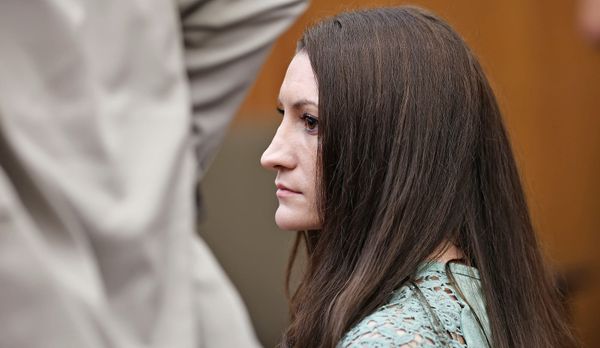
The trial of Lindsay Clancy, the Massachusetts woman charged with the murder of her three children, will not end. As of this writing, the jury has returned twice to claim it cannot reach a verdict; if the jurors do not reach one soon, we may be forced to endure this whole spectacle again. Clancy is currently the most famous of the dozens of defendants who pleaded insanity across the United States this year; hers was not the most complex of these cases, nor even the most interesting. It became a national fixation for other reasons, in particular the horror of the crime and the suburban neutrality of the defendant. But it revealed, as such cases always do, two facts about the American relationship with the insanity defense.
The first is that Americans do not understand what the mad defense requires. They do not understand how common it is, how successful it is likely to be, or what happens to somebody who manages to secure it. Our mad defense has almost nothing to do with madness at all. The usual tests of capacity to appreciate the wrongness of the act and the capacity to resist the impulse to commit them are better measures of extreme intellectual disability than of insanity. Even still, the evidentiary standards have only risen over the decades, and several states have abolished the defense entirely. Juries have shown themselves willing to ignore the legal standard, even when it is met, if the crime is sufficiently unnerving. Nearly every insanity pleas is reached by pretrial agreement. Securing one is not always in a client’s best interests. The conditions of a forensic psychiatric hospital, the term of confinement, and the supervision to which the defendant is subject after release is so daunting that in many cases even a blameless schizophrenic would be better served by pleading guilty and taking ordinary prison time.
“We want blood to be paid in blood.”
The second fact is that the first fact does not matter. Widespread confusion over the nature and frequency of the insanity defense is not an innocent mistake. It is an alibi. Our formal principles of criminal justice require us to consider the defendant’s state of mind and to treat culpability as a matter of moral capacity. Insanity makes this very difficult to do. But when the crime is terrible enough, we don’t want to be bothered by all that. We want blood to be paid in blood.