


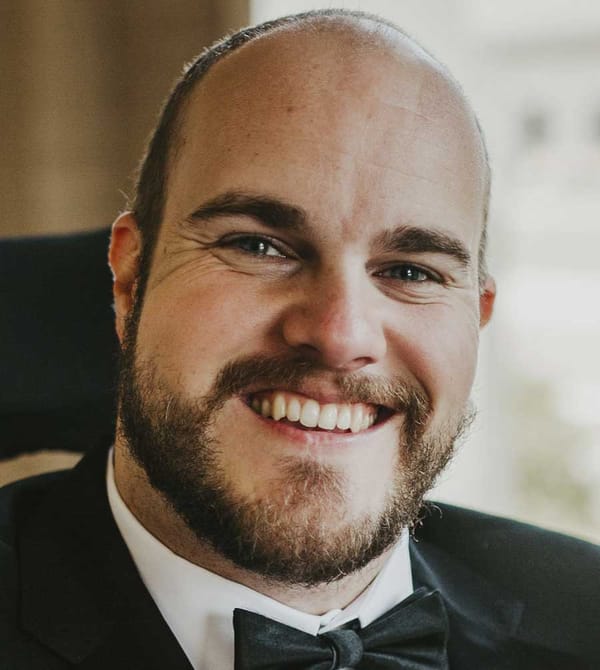
I cannot count the number of times I’ve been told by people that I must have overcome so much in order to drive a minivan. I have been told that my presence in a public swimming pool is impressive, even though I swim at half the speed of everyone else. A school-trip organizer once wondered in hushed tones whether it would be okay to give me a trophy for attending. After all, it certainly couldn’t have been easy for me.
When people see a wheelchair user like me, they evidently assume my disability must be so hard to survive, so painful, and so isolating that even just venturing beyond my front door is an achievement worthy of recognition.
No wonder they think it is compassionate to give us the option to end our lives. Surely, they would like to have this option too in the nightmarish event they ever become disabled. But what is really worth recognizing is that able-bodied fears, rather than disabled realities, are distorting public thinking about “assisted dying.”
Take the example of the advocacy of Dr. Jeremy Boal, former Chief Clinical Officer of the Mount Sinai Health System. When he was diagnosed with ALS, what filled him with dread was not death itself but the prospect of life with a disability. He worked with New York’s recent campaign that led to the legalization of medical aid in dying (MAiD).
Boal did not write from a position of unbearable physical pain. He continues to live in his home with his wife, participate in community life, exercise, and meditate. Nor are decline and death foreign concepts for him: He described his experience caring for many patients with terminal illnesses.
Nonetheless, his present suffering is palpable. He wrote in a recent column that his diagnosis transported him from “the intellectual awareness of death” to “the emotional reality of facing it.” He couldn’t help but think of unbearable suffering as what lay ahead. He thought of people who were “mentally intact but imprisoned in their own bodies, unable to move, swallow, speak, or breathe.” He recalled “the look of desperation in their eyes when they could no longer communicate.” He had “a vision of my own death: I would be choking on my own saliva, gasping for air, unable to communicate my needs, my eyes filling with panic, as my family and friends looked on helplessly.”
This vision of the future, and not his current physical symptoms, terrified Boal. He attributes the return of his peace to a realization: In contrast with the horror of descent into the depths of disability, “I will have the privilege of creating the exact conditions I want for my own death,” maintaining “the freedom to determine my own fate.”
As someone who has always lived with a disability, it strikes me that the anticipation of disability can inspire more dread than the prospect of death. One reason these fears are so powerful is that people consistently underestimate the human capacity for adaptation. What seems unimaginable before it happens often becomes manageable once it does.
“People consistently underestimate the human capacity for adaptation.”
I have no idea what it is like to imagine losing the ability to walk because I’ve never stood up. For me, using a wheelchair is simply ordinary life. I need to find ways to stay physically healthy that cannot include a treadmill or even a walk in the park, and every night for eighteen years, my legs and one hand were strapped into hard plastic splints to maintain my range of mobility. Through my disability communities, I know people who rely on ventilators to breathe, robotic arms to eat, and picture boards to communicate.
People look at these lives and imagine what it would feel like to lose mobility, speech, or independence, and assume that the life that follows must be unbearable. But disabled people frequently report lives that are meaningful and fulfilling, even as they encounter difficulties to which others are not accustomed. Still, policy debates often treat the able-bodied imagination of disability as more authoritative than the experiences of those who have adapted to it.
Though acquiring a progressive disability is undoubtedly a different experience from being born with a non-degenerative one, such as mine, there is a real distance between anticipated terrors and lived realities. It is certainly hard for me to think of what losing the abilities I am accustomed to having would be like. But these possibilities are not so overwhelming as to cause the “overwhelming sense of dread and near-total panic” described by Boal, nor to make me think I would prefer a lethal injection delivered at needlepoint. Nevertheless, it might take time for me to adapt to a new reality, and it’s during this period that people with and without disabilities are most at risk from the cultural assumption that death is preferable to disability.
“There is a real distance between anticipated terrors and lived realities.”
Boal is not the only one who conceives of extreme disability as “being imprisoned in a body that had died around me.” A large majority of expectant parents obtain an abortion following a prenatal Down syndrome diagnosis, surely in part out of a misguided sense of compassion—even though peer-reviewed research has found that an astronomical 99 percent of people with Down syndrome “indicated that they were happy with their lives.” Medical administrators and even some laws use “quality adjusted life years” (QALYs) to devalue the lives of disabled people in making health care decisions.
I can’t help but think that QALYs, and some views on disability abortions and MAiD, are interconnected. At every stage, disabled life can be seen as a fate literally worse than death, especially by doctors and medical authorities. After all, they are primed to prevent and eliminate disability, a logic that sometimes extends even to eliminating disabled lives altogether. Indeed, Harvard researcher Lisa Iezzoni, a wheelchair user and physician, has documented that “82 percent of doctors said that people with disabilities have a worse quality of life than those without.”
Iezzoni speaks from her own experience to push back. “It’s possible for somebody with a disability to hold two truths that might seem inconsistent but are able to coexist. One truth is that they can’t walk, but the other truth is that they have a good life.” A truth about my own experience is that, yes, it can be frustrating (and sometimes, quite limiting) to have access to only a select few motor vehicles, houses, and at times even bathrooms; rely on others to shower and do laundry; and know that my infant daughter will be able to escape me once she can bounce up just one or two stairs. But the other truth is that I have had an extremely happy life so far—spiritually fulfilled, rich in love, and intellectually engaged. In fact, I owe many of my best experiences and insights specifically to having a disability and adapting to it throughout my life.
Adaptation can be possible even for more debilitating disabilities. I recall when a professor friend of mine was diagnosed with Alzheimer’s disease. He told me he feared “drowning alive.” I visited him over the years that followed, first at his home, then in assisted living and, finally, at his bedside. Though he could no longer quote Jean-Paul Sartre, his music therapist said he could still hum songs and smile. This was not the autonomous life he had once lived, but neither was it the bottomless chasm he had feared. His anticipatory fear was greater than the actual pain he ended up experiencing.
Disability is not death, but the assumption that it brings unbearable suffering is becoming a justification for assisted dying. While Boal’s fears deserve sympathy, seen from the inside, disabled lives are not the prison sentences many imagine. If assisted dying laws are built on able-bodied people’s projections rather than disabled people’s realities, we risk giving those misperceptions the last word over life and death.