


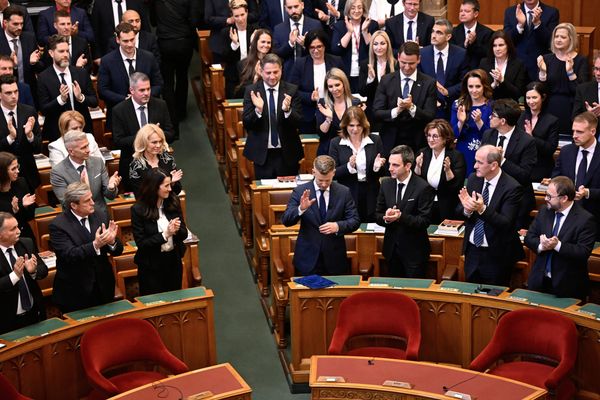
A few weeks after Peter Magyar’s victory in Hungary’s elections, two competing narratives are already hardening around his new government. Liberals celebrating the end of Orbánism see a democratic turn, a country rejoining the European mainstream after years of apostasy. Others note—skeptically or approvingly, depending on where they stand—that Magyar spent twenty years inside Orbán’s machine, and suggest the change he represents is more cosmetic than substantive.
What neither reading captures is the deeper logic of Magyar’s political project: who is behind it, what interests it represents, and what it is therefore likely to do. The answer lies not in the new prime minister’s biography or campaign slogans but in the three figures who now control Hungary’s economy, foreign affairs, and public finances. Their professional histories tell a coherent story, and it is not the story that either Magyar’s supporters or his critics have been telling. Magyar’s is not a liberal government in any meaningful sense, nor is it simply Orbánism with a different face. Instead, it is a government in which Western corporate and financial interests—above all, US energy interests—have co-opted elements of Orbán’s populist narrative so as to dismantle his sovereigntist project.