


End of Days: Ruby Ridge, the Apocalypse, and the Unmaking of America
By Chris Jennings
Little, Brown, 384 pages, $30
Fires in the Night: The Earth Liberation Front, the FBI, and a Secret History of Eco-Sabotage
By Matthew Wolfe
Viking, 368 pages, $32
In 1992, the tiny, unincorporated village of Naples, Idaho became the ground zero of a national movement of far-right, anti-government activists and agitators. A crowd of hundreds gathered along the banks of Ruby Creek, among them fundamentalist preachers, Neo-Nazi skinheads, and doomsday preppers. They were there to support the Weavers, a family of Christian white supremacists who had retreated into the wilderness to await the apocalypse. The family was under siege by federal law enforcement agents seeking to arrest the family patriarch, Randy, on a gun charge he had been evading for a year and a half. The standoff, which became known as “Ruby Ridge,” initiated a new, militant chapter in right-wing resistance to the federal government.
A few years later, about six hundred miles to the southwest, another gathering took place. Ideologically, it was the opposite of Ruby Ridge. Its participants believed not in Jesus Christ, but in Mother Earth, not in the superiority of the white race, but in the moral equivalence of all species, whether human, animal, or plant. At Warner Creek, in Oregon’s Willamette National Forest, they constructed a road blockade, complete with a moat and a drawbridge, which dozens of activists occupied for nearly a year, preventing logging trucks from getting in. They won that battle when the government backed down, reimposing restrictions on logging in national forests like the Willamette. But they also knew they were losing the larger war between human civilization and nature. In their desperation, some of the Warner Creek occupiers formed a new underground movement: the North American cell of the Earth Liberation Front (ELF).
These two radical movements were opposed in their values and aims, but shared a conviction that the world was ending—an anxiety that has become more pronounced and widespread in the decades since. Chris Jennings’s End of Days, on Ruby Ridge, and Matthew Wolfe’s Fires in the Night, on the ELF, both published this year, therefore make for timely companion reading.
The Weavers’ apocalyptic beliefs, as Jennings documents, mixed a specific reading of the Bible with various conspiratorial fantasies. Randy and his wife, Vicki, believed in the literal word of the Book of Revelation, and they raised their three children to believe it, too. They expected to be here on earth when Judgment Day arrived, and they were preparing for it with guns, canned food, and, eventually, a hand-built cabin in the Idaho wilderness. Their separatist theology, already antisemitic, soon became racist as well, as the Weavers were pulled into the orbit of the Aryan Nations, which had a compound in nearby Hayden Lake. After Randy became a fugitive from the law, the Weavers interpreted the government’s every action to bring him into custody as part of a Zionist Occupied Government conspiracy against them. When government agents shot the family’s dog and their teenage son and formed an armed siege of their property, their paranoia began to coincide with reality.
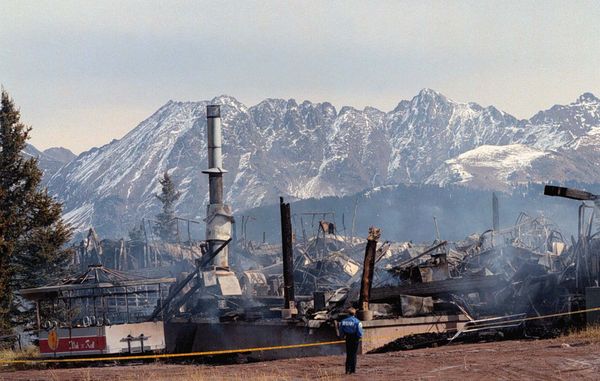
The founders of the Earth Liberation Front, by contrast, were steeped neither in religion nor conspiracy. They believed that the world was ending because, as they saw it, that was plainly happening before their eyes. Deforestation, industrial pollution, mass species extinction—none of it seemed to be slowed by litigation, legislation, regulation, and the other tools of the mainstream environmental movement. On the contrary, above-ground environmental groups were moderating their ambitions as the crisis grew ever more dire. Normal political action was simply inadequate to stave off a disaster that was unfolding in real time. More direct means were called for. Over a period of about five years, the ELF executed dozens of often meticulously planned acts of arson, including the torching of a major portion of the Vail Ski Resort. After 9/11, their crimes were cast not just as the illegal tactics of political insurgents, but as acts of “terrorism.” Spread across years rather than days, the crackdown the ELF provoked from the government was every bit as vast and unyielding as the one at Ruby Ridge.
Jennings draws a fairly sanguine conclusion from what has transpired in the years since Ruby Ridge. The Weavers’ paranoia, he argues, was just that: paranoia. “The federal government has not gone on hunting white fundamentalists,” he writes. “The FEMA camps, black helicopters, and Mark of the Beast tattoos have not yet been activated. The guns and Bibles remain unconfiscated.” He believes that today’s right-wing conspiracy theorizing is the result of “a slow-moving, ontological crackup—the fracturing of American reality itself.” It’s an outcome, in other words, not of actual conditions in the world, but of some sort of collective mental illness. By this account, it is the radical right that needs to be re-programmed, not the world itself.
“That fatalism has become a hallmark of our politics.”
Wolfe’s perspective is darker. The ELF failed to achieve its goals, but not because the activists were crazy. It was because the crisis they sought to address has proved to be essentially unstoppable. “Nearly two decades on from its dormancy, the ELF looks uncomfortably prescient about our collective inability to respond properly to human-made forces that have grown beyond our control,” he notes. “Many more have become dubious about the ability of politics to, in the face of corporate power, save us.” That fatalism has become a hallmark of our politics.
The Ruby Ridge shootout and the ELF’s arson campaign marked the beginning of an era we are still living through. The Weavers and their allies raised the banner carried in more recent years by QAnon and the January 6 rioters. At Ruby Ridge, the utter fiasco of the government’s response provoked paranoia and suspicion that fed into the Waco standoff, the Oklahoma City federal bombing, the standoffs with the Bundy ranching family, and the rise of new militia-based groups like the Oath Keepers.
There is no such active legacy to point to from the ELF, but that’s largely because the tactics of radical environmentalism were so thoroughly shut down by law enforcement. Among environmentalists, the systematic suppression of the ELF inspired not anger, but despair. The group’s militant, confrontational tactics had shown themselves every bit as useless as the incremental, compromising approach of mainstream environmental groups in altering the path of the industrial juggernaut ripping apart our forests, jungles, deserts and oceans. Today, there remains only a sense of hopelessness in the face of ecological collapse.
The close of the Cold War was meant to usher in the final victory of democratic liberalism. With the ideological wars of the twentieth century in the rear view mirror, politics was supposed to evolve into a benign project of technocratic management carried out by well-functioning, pluralist, capitalist institutions. The rejection of this system by the far right and far left of the 1990s—the Weavers and the ELF—was an early warning signal of the crisis it would face decades later.
“The public is overcome with a sense of alienation and powerlessness.”
Today, the public is overcome with a sense of alienation and powerlessness before a consolidated, post-ideological elite that seems almost entirely unresponsive to its concerns. The world is increasingly split not between left and right, but between high and low, which is why conservatives and liberals alike have embraced populism.
The most energized among us have been drawn to the extremes, where there lingers a sense that perhaps revolution can achieve what our ossified democratic institutions and our corrupt political class is both unwilling and unable to. Three decades ago, right-wing militias and the radical environmentalists were also seduced by that siren song, and heeded its call. But today, I suspect that even the most devoted followers of QAnon or Extinction Rebellion understand, even if they wouldn’t admit it, that it’s all just a fairy tale.
It is as delusional to believe that meaningful change can come from guns and incendiary devices as from votes and campaign contributions. Government repression of radical groups from the Black Panthers to the ELF disabused the left of those illusions some time ago. The left-coded political violence of today, including Black Lives Matter riots and the assassinations of Charlie Kirk and of the CEO of UnitedHealthcare, is purely nihilistic, unattached to any broader theory, however fantastical, of political change.
The right, too, has experienced repression in recent years, with the crackdown on the Canadian truckers and the prosecution of the January 6 rioters. For now, conservatives hold the levers of American political power, but it is likely that soon enough, they too will be shaking their fists at an oligarchy that barely knows they’re there.