


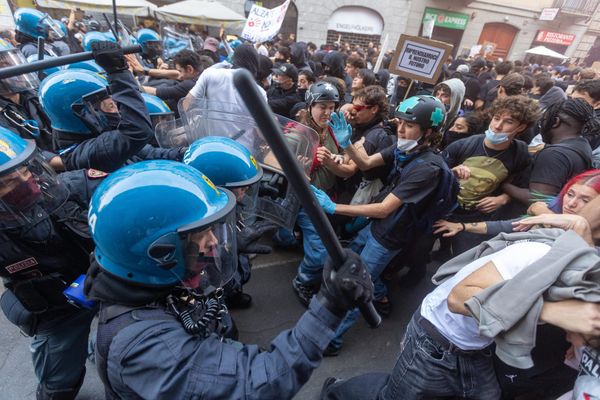
After the Second World War, Europe sought to build a new social order that would mark a dramatic break with its recent militaristic and undemocratic past. One of the elements of this order was that the masses would be able to protest with state protection. The consensus was that this would strengthen the democratic spirit, allowing political contestation to happen not only in parliament, but in the streets.
The latest wave of protests is testing what remains of this consensus. On October 17, around 550,000 people protested across France, and masked arsonists burned down the town hall of Limoges and set Lyon’s tourism office on fire. The violent protests have also expanded to Italy, and the largest union in Italy, CGIL, called for a national strike.
Appeasement has long been European governments’ preferred response to such episodes. In Italy and France in the 1970s, major concessions to organized labor consolidated its power. More recently in France, the Gilet Jaunes protests led the government to walk back the proposed carbon tax, and the pension reform protests led to the suspension of Emmanuel Macron’s plan to raise the retirement age from sixty-two to sixty-four.